A useful place to begin
A cold shower does not automatically mean your tankless water heater needs replacing. The cause might be at one fixture, involve hot-water demand, or require a model-specific repair. Knowing what changed can make the service conversation more useful without turning a homeowner check into an unsafe repair attempt.
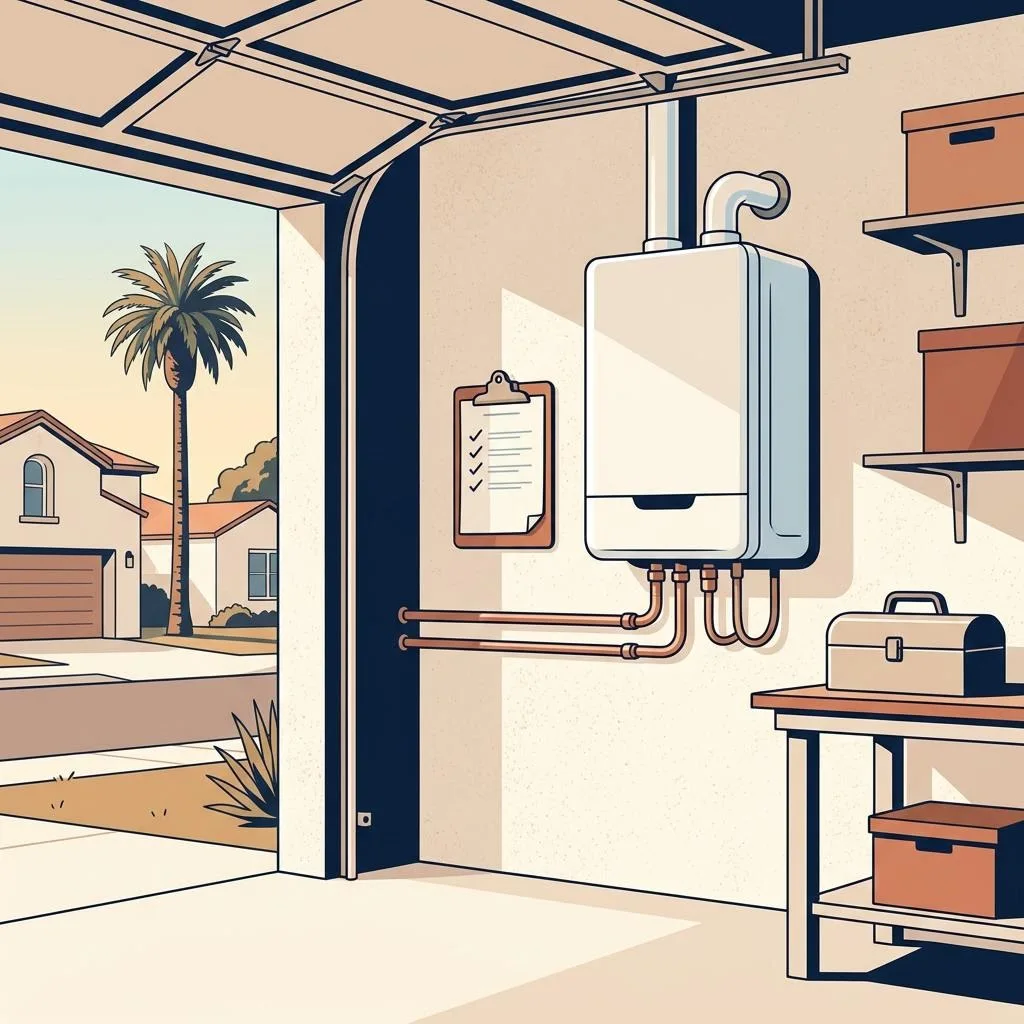
In Los Angeles, a garage-mounted heater in an older San Fernando Valley home presents different access questions from an outdoor unit or equipment serving a condo. Start with safety, then gather a few observations about your own system. This guide explains what to note and when to stop checking and call for help.
Stop immediately if there is a safety concern
If you smell gas, leave the area. Do not operate switches, light a flame, or attempt to restart or repair the heater. Contact your gas utility or emergency services from a safe location and follow their instructions. A repair appointment is not a substitute for responding to a suspected gas leak.
Treat a carbon monoxide alarm as an emergency: move to fresh air and contact emergency services. Do not remain in the area to investigate the heater. Visible scorching, smoke, or damaged venting also calls for professional attention rather than another attempt to run the appliance.
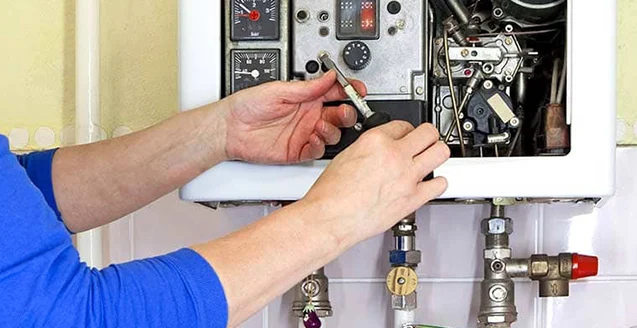
If water is leaking around the unit, avoid wet electrical equipment. Do not remove the heater cover or reach into the cabinet. The internal service work shown in this article's reference photo is for a qualified professional, not a homeowner troubleshooting step.
Is the problem at one fixture or throughout the home?
If there are no safety concerns, note whether another accessible hot-water fixture has the same problem. One shower staying cold while the kitchen heats normally may point to a fixture or mixing issue rather than a complete loss of heater output. That observation helps narrow the investigation, but it does not identify a failed part by itself.
If every hot tap is affected, record whether the water stays completely cold, becomes lukewarm, or warms briefly before cooling. Also distinguish a new problem from the normal wait at a distant fixture. A tankless heater still has to move the cooler water already sitting in the distribution pipes.
In a condo or managed building, ask the property manager whether hot water or equipment is shared and whether other residents are affected. Do not assume that an individual heater is responsible for an interruption elsewhere in a shared system.
Notice when flow and household demand change
Tankless equipment needs sufficient water flow to activate, and its delivered capacity depends on the required temperature rise. A problem that occurs only at a very low-flow fixture is different from one that appears when several showers run together. Describe the pattern instead of increasing the temperature setting to compensate.
If the heater works during a single-fixture use but struggles during simultaneous use, a professional can compare the actual demand with the model's capacity and supply conditions. A larger advertised flow rating is not enough information to choose replacement equipment.
Los Angeles households can change their hot-water demand after a bathroom remodel, an added living space, or a change in occupancy. Mention those changes when requesting service. Do not assume that all homes in the area have the same incoming-water conditions, plumbing layout, or utility arrangement.
- Does the issue affect one fixture, several fixtures, or the entire home?
- Does it happen during a single shower or only when other hot-water uses overlap?
- Is the problem new, intermittent, or present since installation?
- Were there recent plumbing changes, utility interruptions, or changes in household use?
Record the display message and maintenance history
If the controller is safely accessible, photograph any displayed code or message before it disappears. Record the brand and exact model from an accessible label or existing paperwork. Rinnai, Navien, and other manufacturers use model-specific instructions; the same-looking symptom does not justify applying another model's reset procedure.
Repeatedly clearing a code can hide useful information without resolving the cause. Avoid cycling breakers, adjusting gas controls, or attempting an improvised flush as a general troubleshooting routine. Follow the manual for the exact heater and let a qualified technician determine which checks are appropriate.
Maintenance records are useful context. Mineral deposits, restricted flow, and other conditions can affect operation, but a lack of hot water does not prove the heat exchanger needs descaling. Share the last known service date and any water-treatment information rather than booking a flush as an assumed fix.
Prepare a repair request that starts with useful details
For a Los Angeles service visit, mention whether the heater is in a garage, outdoors, or inside a building with controlled access. An exterior unit in a narrow side yard, a hillside property, and a condo equipment area can have different access arrangements. If an HOA or property manager needs to provide entry, arrange that before the visit.
A technician may need to assess water flow, utility supply, venting, controls, or fixture interactions. Describe symptoms rather than requesting a specific replacement part based on a general online guide. Ask what the proposed diagnostic visit includes and what would require separate approval.
Tankless Water Heater Solutions accepts repair enquiries for homes in Los Angeles and the surrounding service area. When you request service, share the model, the display message, the affected fixtures, and when the problem started. A site assessment can then establish the next steps without guessing at the cause, cost, or need for replacement.
- Brand, exact model, and approximate age, if known.
- A photo of any display message and a description of when it appears.
- Which fixtures are affected and whether demand changes the symptom.
- Last known service date and any recent plumbing or utility work.
- Location of the heater and any building-access restrictions.
Quick reference
Frequently asked questions
Why does my tankless heater work at the sink but not in the shower?
A fixture or mixing issue may be involved when other taps heat normally. Note which fixtures are affected and whether the symptom changes with flow. A professional can check the fixture and system rather than assuming the heater has failed.
Should I reset the heater whenever it displays an error?
Record the code first and consult the manual for the exact model. Do not repeatedly reset a recurring fault or attempt a restart if there is a gas smell, carbon monoxide alarm, leakage near electrical equipment, or another safety concern.
Does cold water mean the tankless heater needs replacement?
Not necessarily. A fixture issue, operating condition, supply problem, or repairable fault can affect hot water. Diagnosis should come before a replacement decision or equipment purchase.
Can descaling fix a tankless heater that is not heating?
Only if scale is contributing to the problem. A loss of hot water has other possible causes, so maintenance history should inform the assessment rather than replace it.
Further reading
Sources
This article is general educational information. Follow the manual for your exact model; site conditions and service requirements should be assessed individually.