Home service guidance · Southern California
Tank-to-Tankless Conversion in Los Angeles & Ventura County
Removing a storage tank does not establish that its replacement can use the same gas pipe, vent, or electrical connection. A conversion compares the existing installation with the input and layout requirements of a specific tankless model. The plan may involve new intake or exhaust routing, water connections, power, and condensate disposal even when the cabinet occupies less space. Establish utility-upgrade and permit responsibilities before comparing conversion cost with another tank replacement.
Serving Los Angeles County & Ventura County, including Simi Valley and Agoura Hills
Explore service details01 / Scope
A clearer picture of what the service can involve.
The right scope depends on your heater, its installation, and what you are experiencing. These are useful topics to discuss before work is agreed.
Existing tank location and accessible utility-connection assessment
Gas pipe and meter capacity review for the candidate heater
Approved intake/exhaust route and termination planning
Electrical connection, circuit or load requirements for the selected model
Mounting space, service clearance, water piping and drainage review
Agreement on tank removal, disposal, permits and any utility upgrades
02 / What changed?
Signs it may be time to ask a question.
A symptom is a clue, not a diagnosis. Describe when it happens and whether it is consistent or intermittent.
The existing tank vent does not match the proposed model
Candidate equipment has a higher gas-input or different electric load
Removing a tank would change the mounting or pipe arrangement
The new installation may require a condensate drain route
03 / The conversation
A practical path from question to next step.
Share what you know. The exact service plan can be discussed once the system and situation are understood.
- STEP 01
Map what is installed now
Identify the tank, current fuel, accessible connections, vent path, and location before listing changes required by a candidate tankless unit.
- STEP 02
Compare utility and vent requirements
Check proposed gas input or electric load together with the model’s approved venting and condensate needs; do not treat every connection as reusable.
- STEP 03
Define conversion responsibilities
Document the proposed equipment, required upgrades, applicable permit office, and responsibility for the old tank before agreeing to an installation scope.
- STEP 04
Plan clearance and ongoing access
Evaluate how the new cabinet, valves, piping, and electrical connections will fit while preserving the model’s maintenance space.
04 / A note on this service
Straight answers start with the actual system.
For a more useful first conversation, have the heater's model number and a short description of the issue or project on hand.
Serving Los Angeles County & Ventura County, including Simi Valley and Agoura Hills
Business hours: Mon–Thu 8 AM–6 PM · Fri 7 AM–2 PM · Sat–Sun Closed
Installation, repair, conversion, and maintenance enquiries through one contact.
Visual reference
Equipment & service reference images
Illustrative equipment and service photos, not presented as a portfolio of this company's completed jobs.
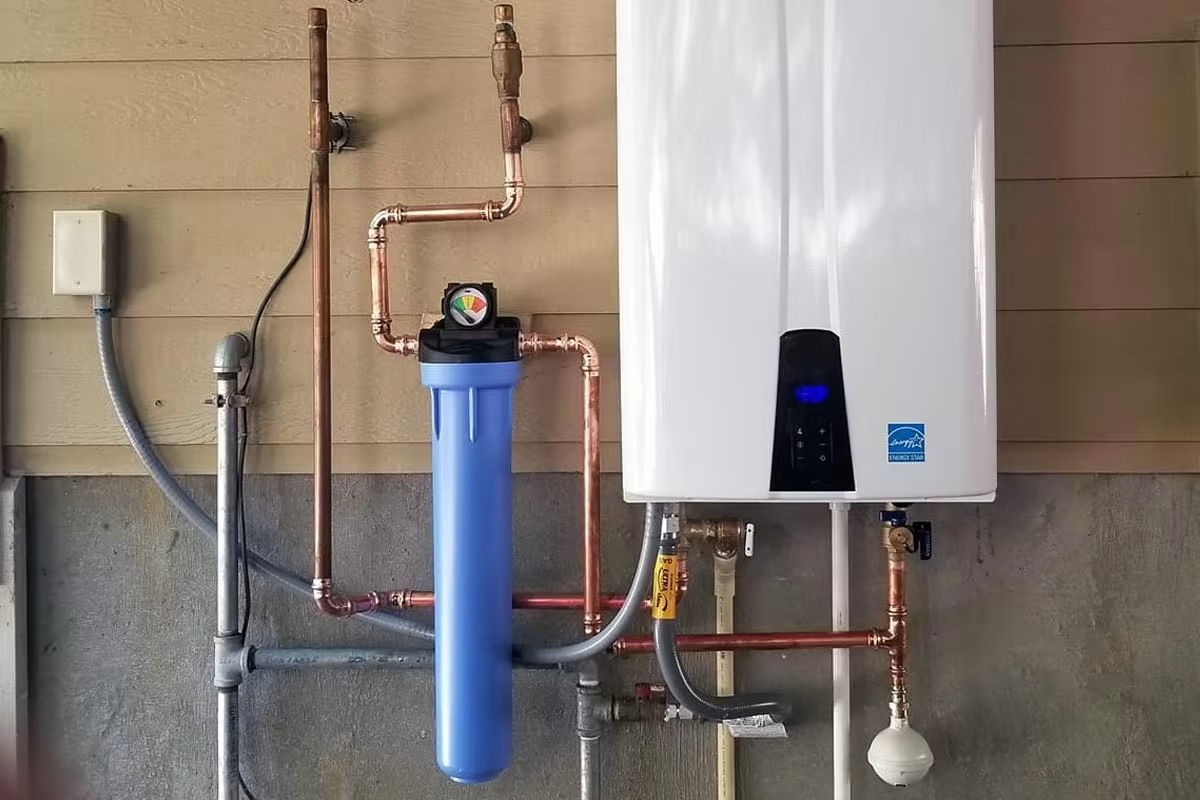 Installation reference
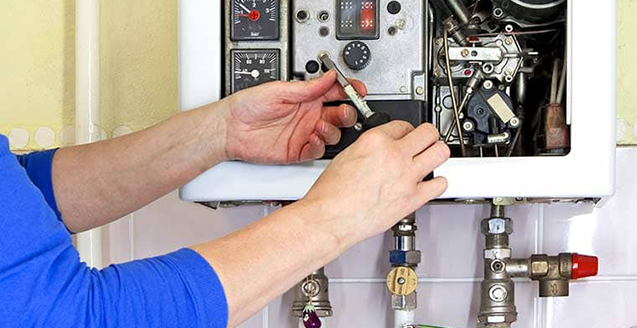 Service reference
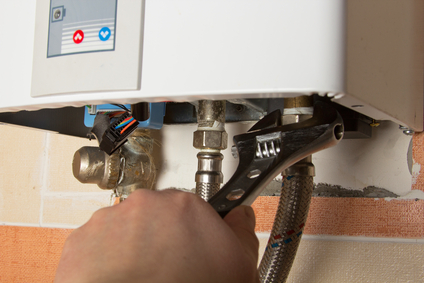 Maintenance reference
05 / Common questions
Before you make the call.
These answers are a starting point. The right guidance depends on the specific equipment and scope.
Does conversion require larger gas piping?
It may. Sizing depends on the selected heater’s input, pipe length and configuration, and other connected appliances. Meter and supply capacity must also be assessed rather than inferred from the old tank.
Can the old tank’s vent be reused for tankless?
Only if the proposed equipment’s instructions and applicable requirements permit that arrangement. Vent material, diameter, routing, intake, and termination can differ from a storage-tank installation.
What electrical work should be considered in a conversion?
Check the selected model’s power and connection requirements, even for gas-fired equipment. An electric tankless option can require substantially different electrical capacity; assess the actual service and circuit requirements.
Will removing the tank make any wall suitable for the new heater?
No. Mounting conditions, operating clearances, maintenance access, piping, venting, and drainage still constrain placement. Compare the complete installation space rather than cabinet dimensions alone.
Who handles conversion permits and disposal?
Identify the correct building jurisdiction and agree who will arrange permits, any utility coordination, and lawful tank removal or disposal. Do not assume those items are included without written scope confirmation.
Does tankless conversion guarantee lower utility bills?
There is no fixed savings promise. Compare the selected equipment, household demand, energy prices, and total installation or upgrade costs before deciding.
Keep exploring
Related tankless services
If your question crosses into another part of the system, these may help.
06 / Your next step
Tell us what your heater is doing.
Share the model, what you need help with, and your location. An enquiry is a way to start the conversation—not a diagnosis or fixed quote.