A useful place to begin
A backyard accessory dwelling unit adds a new hot-water routine to a Los Angeles property. Before choosing equipment, decide whether the ADU will have its own water-heating system, how many fixtures may be used at once, and whether the planned location can accommodate the selected model and its utility connections.
A compact tankless unit can look like a simple space-saving choice, but the right system depends on the ADU design, the existing home's utilities, current code requirements, and the local permitting authority. Use this planning guide to prepare the right questions before equipment is selected or work begins.
Size for the new dwelling's real use
Count fixtures that may run together rather than relying on the ADU's square footage or bedroom count. Two showers, or a shower and another high-flow fixture, may create a short peak that a single low-use bathroom does not. Fixture flow and desired hot-water temperature both affect the heater's required output.
Tankless performance depends on temperature rise: the incoming water temperature compared with the outlet temperature. Ask the installer to use the selected model's performance data for the expected inlet conditions and fixture demand. A product's advertised maximum flow alone is not a design calculation.
If the ADU will include a large tub, multi-outlet shower, or another high-demand fixture, identify it early. These choices can change the equipment and distribution plan, and are easier to consider while layouts and utility routes are still being designed.
Confirm current energy-code and permit requirements
Do not select a heater based on a broad claim that a particular fuel or tankless model is automatically allowed for every ADU. California energy-code requirements can depend on the project scope and building conditions. The California Energy Commission's current ADU guidance addresses water-heating and electric-ready requirements; have the design professional and permitting authority confirm how those rules apply to this specific project.
In the City of Los Angeles, consult LADBS for applicable ADU and building-permit requirements. An ADU in another incorporated city may fall under that city's building department. Verify jurisdiction, permit scope, and any required plan review before scheduling installation. Utility approval or HOA review, if applicable, does not replace permits.
Ask for the equipment model and proposed fuel type to be documented in the plans or proposal. If the design changes, confirm whether the revised heater, connections, venting, electrical work, or other related scope needs updated review.
Plan utilities, placement, and service access
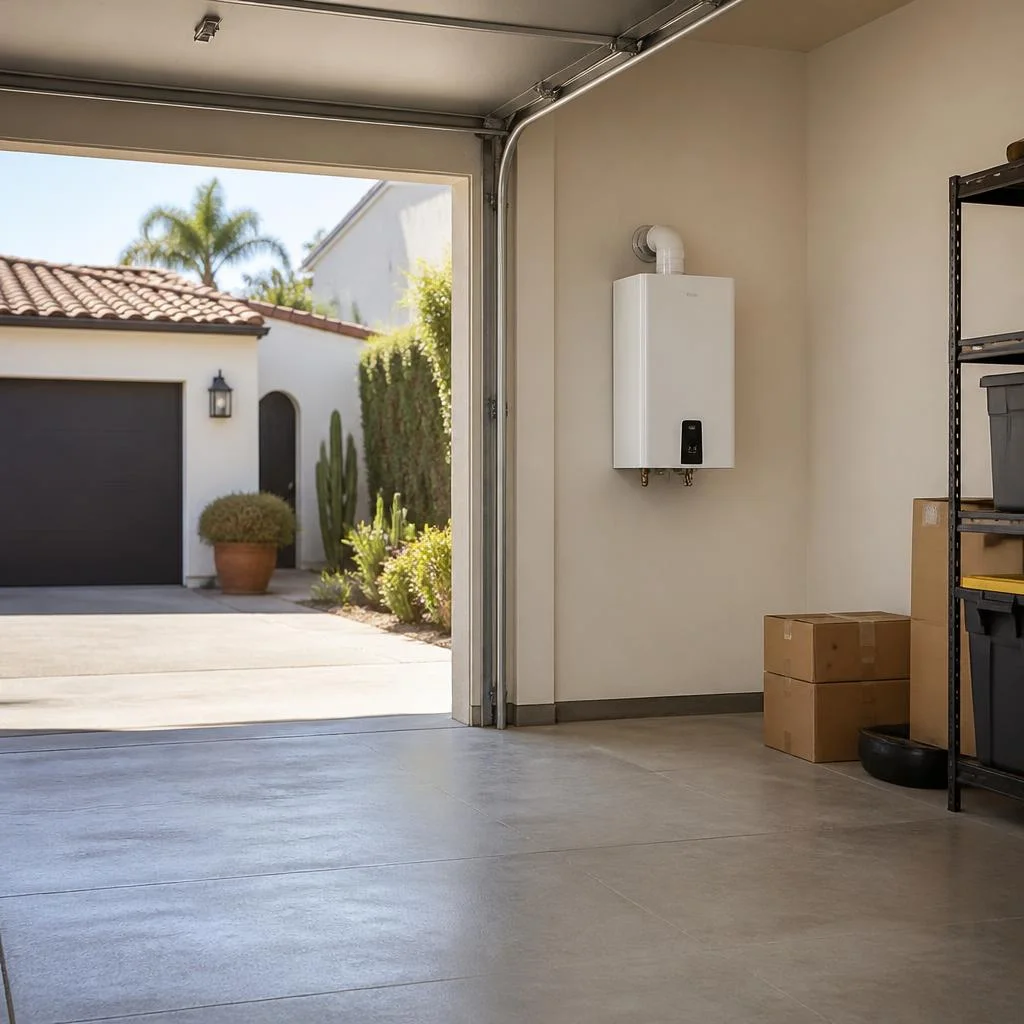
A new heater must fit the ADU's actual utility and building layout. Gas-fired models require evaluation of gas supply, venting, combustion air, and approved clearances. Electric models require the electrical service and circuits to be checked against the selected equipment. Neither should be treated as a plug-in swap without a project-specific assessment.
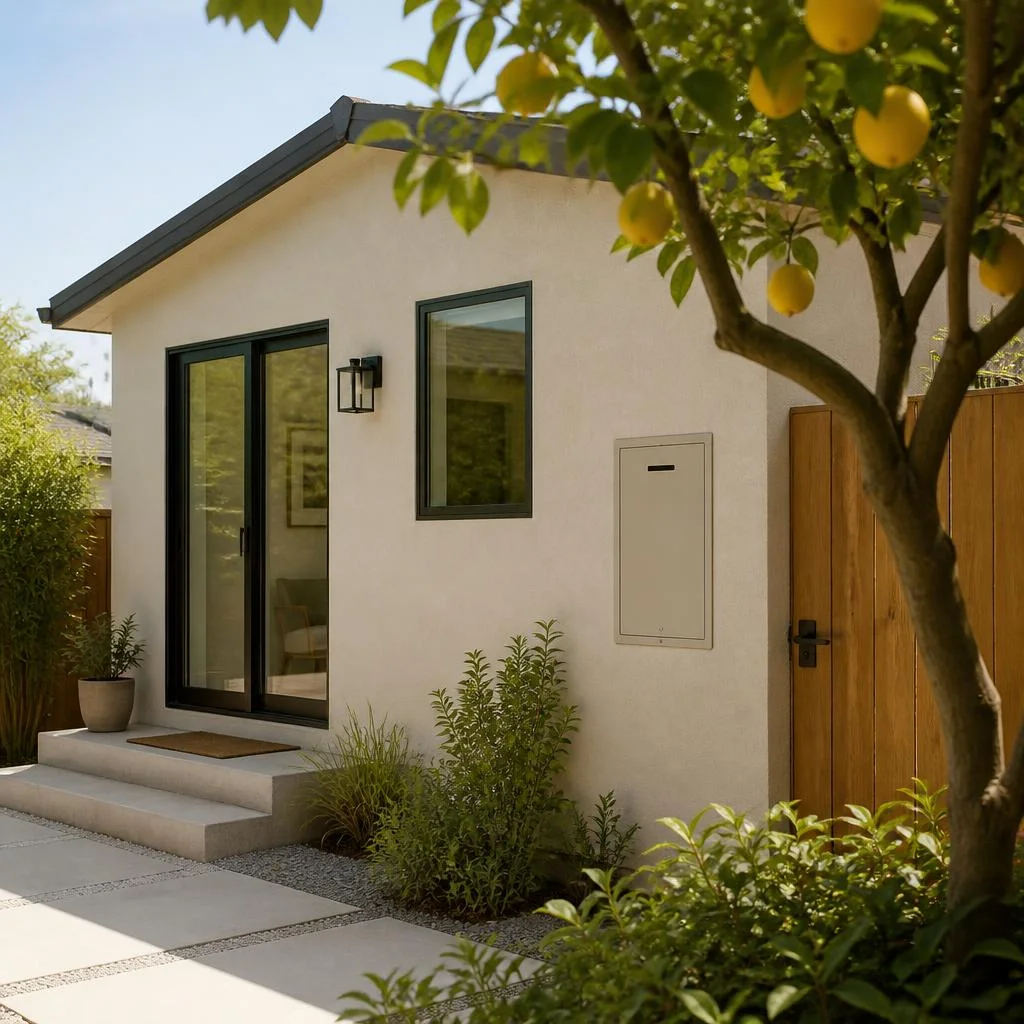
Consider whether an outdoor-rated model or an indoor configuration fits the approved plans, not just the available wall space. The model's installation instructions govern its location, clearances, vent or air arrangements, protection from weather, and access for maintenance. A cabinet or fence should not block required service access.
In a compact backyard, also map the route for hot-water piping, condensate where required, shutoffs, and any approved intake or exhaust termination. Keep the ADU and the main home distinct in the plan so that future occupants and service providers can identify which system they are working on.
Think beyond the heater cabinet
The heater's location relative to the ADU bathroom and kitchen affects the wait for hot water. A distant fixture may still take time to receive hot water because the pipe between it and the heater must fill. Discuss pipe routing and whether a manufacturer-compatible recirculation approach is appropriate before walls are closed.
Review the equipment's maintenance requirements and make sure future service is practical. The exact model's instructions and the conditions at the property determine maintenance needs; do not assume every heater has the same descaling interval or service procedure.
A clear handoff matters when a separate dwelling is rented or used by family. Ask for the model documentation, basic operating instructions, service access details, and a record of completed permitted work. Keep homeowner checks to visible, safe observations; gas, electrical, venting, and internal appliance work belong with qualified professionals.
What to bring to an ADU water-heater consultation
Bring the ADU plan or fixture schedule, the proposed heater location, and any available information about gas and electrical service. Note the expected occupants, showers and other fixtures, whether the main home will use hot water simultaneously, and whether the project is new construction or an addition to an existing building.
Ask which code and permitting assumptions were used, what model and fuel type are proposed, and whether the estimate includes required utility or venting work. If you are still comparing options, review the site's tankless installation and tank-to-tankless conversion service pages, then discuss the ADU's specific layout with Tankless Water Heater Solutions.
Quick reference
Frequently asked questions
Does a Los Angeles ADU need its own tankless water heater?
Not as a universal rule based on the ADU label alone. The plans, project scope, expected demand, utility arrangement, and applicable code determine the appropriate water-heating design. Have the project team and local permitting authority confirm the requirements.
Can the main house's tankless heater supply an ADU?
That depends on the existing heater's capacity, the demand from both dwellings, piping layout, utilities, and the approved design. Do not assume spare capacity; request a project-specific assessment.
Can I use a gas tankless water heater in a new ADU?
Do not assume a particular fuel or model is permitted for every ADU. California energy-code requirements vary with project conditions and scope. Confirm the current rules and proposed equipment with the design professional and permitting authority before selecting a unit.
Who handles ADU water-heater permits in Los Angeles?
For a property within the City of Los Angeles, check with LADBS. Properties in other incorporated cities may use their own building departments. Confirm the exact jurisdiction and permits required for the planned work.
When should I choose the ADU's tankless heater?
Evaluate water-heater demand, fuel or electrical supply, venting, placement, and code requirements while the ADU layout and utility routes are being planned—before construction details are fixed.
Will a tankless heater eliminate the wait for hot water in an ADU?
Not necessarily. Pipe distance and layout affect how long water takes to reach a fixture. Discuss piping and any compatible recirculation design separately from heater capacity.
Further reading
Sources
This article is general educational information. Follow the manual for your exact model; site conditions and service requirements should be assessed individually.