A useful place to begin
A little preparation can make a tankless water heater installation day less disruptive. The useful first steps are not opening the old heater or moving gas and electrical connections; they are confirming the project plan, arranging access, and asking when water or other household services may be interrupted.
Los Angeles homes vary from garages with years of stored items to side-yard outdoor equipment and condos with shared access rules. This checklist helps homeowners get ready while leaving technical work, required permits, and equipment-specific clearances to the qualified professionals responsible for the project.
Confirm the equipment and project scope
Before installation day, ask for the planned equipment model, location, fuel or electrical requirements, and the work included in the proposal. If the job replaces a storage tank or changes the heater's location, make sure the proposal describes any related piping, venting, electrical, gas, drainage, or building work that applies to your home.
Clarify who is handling permit applications and inspections for the agreed scope. Requirements depend on the work and the property jurisdiction. For a home in the City of Los Angeles, check with LADBS; elsewhere, confirm the responsible local building department. Do not assume that an existing heater or previous installation resolves the requirements for new work.
If the equipment or planned location changes after the initial discussion, ask whether the updated plan affects the approval or schedule. A written understanding before work starts can prevent confusion about what is and is not included.
Make the work area and access route available
Ask the installer what space and access are needed for the specific project. Clear stored items from the route and immediate work area only as directed, and keep children and pets away from the work zone. Do not use a generic online clearance measurement as a substitute for the selected model's installation instructions.
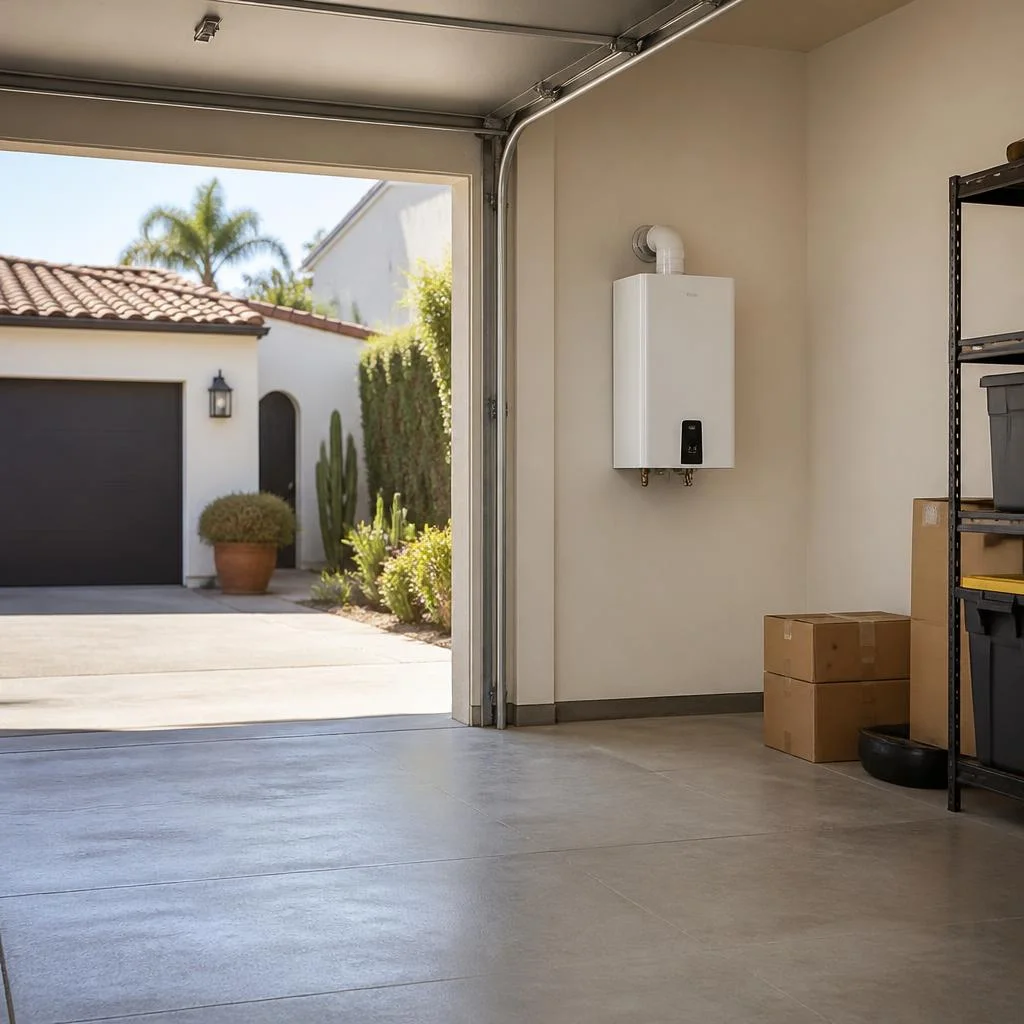
For an outdoor unit, arrange access through side gates or a backyard and mention locked gates, landscaping, or other obstacles in advance. If the heater is in a garage, make sure the installer knows about shelving or vehicles that affect access. Never move or disconnect gas, electrical, venting, or water connections yourself to make room.
If you are unsure what to move, send a photo or ask before installation day. The goal is to make the approved work location accessible without disturbing the appliance or changing the site.
- Confirm gate codes, access windows, and who will meet the installer.
- Move vehicles or stored items only as needed for the agreed work area.
- Keep children and pets out of the work zone.
- Tell the installer about shared spaces, stairs, or access restrictions.
Coordinate condo, HOA, landlord, and parking details
In a condo or HOA-managed property, ask the property manager which approvals, elevator reservations, loading rules, and contractor insurance documents are required. Exterior equipment or changes to a shared wall may have additional association procedures. Confirm these early, since association scheduling is separate from local permits.
For a rental, coordinate with the owner or property manager before the work is scheduled. Identify who can authorize decisions if concealed conditions require a change. Do not assume that a tenant, neighbor, or association manager can approve a change to the equipment or scope.
Los Angeles parking and building access can vary by block and property. Let the installer know about loading restrictions, limited driveway space, call boxes, stairs, or any time windows. The crew can then confirm what arrangements are practical for that appointment.
Plan around possible water or utility interruptions
Ask when the household should expect water to be unavailable and when it is appropriate to use fixtures again. The schedule depends on the equipment, scope, and conditions found at the property, so get timing directly from the installer rather than relying on a generic duration.
If anyone at home has a time-sensitive need for water, let the installer know before work begins. Make a simple plan for drinking water and essential routines if an interruption is expected. Do not operate heater controls or restore a disconnected utility yourself unless the qualified professional gives you specific instructions.
Also ask whether the installer needs access to the main shutoff, electrical panel, or gas meter. Keep those locations accessible and tell the installer if a gate, locked room, or building manager controls access.
Reserve time for a clear final walkthrough
Before the installer leaves, ask for a walkthrough of the completed work and the model's normal user controls. Request the manual, model and serial information, any applicable permit or inspection paperwork, and the maintenance instructions for that specific heater.
Have the installer explain which fixtures were checked and what to do if the unit displays a warning or behaves unexpectedly. Ask where the appropriate shutoffs are and who to contact with a question. Do not open the heater cabinet or try a repair based on a general article.
If you notice a leak, smell gas, or have a carbon monoxide alarm, move to safety and contact the appropriate utility or emergency service from a safe location. Follow the professional's handoff instructions for ordinary operation and service follow-up.
A quick checklist for the day before
A short confirmation call or message can catch practical issues before the crew arrives. Verify the appointment window and site contact, share any access or parking details, and make sure any required property approvals are complete. If equipment, scope, or site conditions have changed since the quote, raise that before work starts.
For help planning a new tankless system or replacing a storage heater, review the installation and tank-to-tankless conversion service pages. Bring your project questions to Tankless Water Heater Solutions so the discussion can focus on your home's actual layout and the agreed installation scope.
- Confirm appointment, access contact, and parking instructions.
- Have approvals and property-manager arrangements ready if applicable.
- Keep the work route clear and secure pets.
- Ask about expected water interruptions and the final walkthrough.
- Keep the proposal and any relevant equipment information available.
Quick reference
Frequently asked questions
Do I need to clear my whole garage before tankless installation?
Usually the key is access to the agreed work area and route, but the space required depends on the project. Ask the installer what to move. Do not use a generic clearance number or disconnect equipment yourself.
How long will water be off during installation?
There is no single duration that applies to every installation. Ask the installer for the expected interruption based on your equipment, scope, and site conditions, and confirm before using fixtures again.
Do I need to be home during the installation?
Ask who needs to provide access and be available for decisions or the final walkthrough. Condo rules, property access, and the agreed work scope can affect whether an owner or authorized contact needs to be present.
Who gets the permit for a tankless water heater installation?
That depends on the scope, contractor arrangement, and local jurisdiction. Confirm in writing who is responsible for applicable permits and inspections. City of Los Angeles properties should check with LADBS; other areas may have a different building department.
Should I turn off gas or electricity before the installer arrives?
Do not disconnect utilities or change heater connections as preparation. Ask the installer what, if anything, the household should do; technical isolation and reconnection should be handled by the qualified professional.
What should I receive before the installer leaves?
Ask for the model information, manual, operating guidance, maintenance instructions, and any applicable permit or inspection documents. Have the installer explain normal controls and the right contact for service questions.
Further reading
Sources
This article is general educational information. Follow the manual for your exact model; site conditions and service requirements should be assessed individually.